
Inside the Spirit Airlines Liquidation: Why It Happened and What Happens Next
May 13, 2026
Spirit Airlines’ liquidation is more than a corporate collapse. It is a case study in how quickly pressure
can build inside a low-cost airline model when financing dries up, fuel gets more expensive, and creditors stop waiting.
What looks simple from the outside—an airline shutting down and parking airplanes—is, in reality, a
dense financial and logistical unwind. The shutdown touches lenders, lessors, airports, maintenance
providers, and secondary aircraft markets all at once.
1. Why It Happened:
Spirit had been under pressure for months before the liquidation process accelerated. A failed $500
million bailout effort removed one of the last realistic paths to stabilize operations, and that failure
changed the tone of negotiations almost immediately.
At the same time, fuel prices spiked. For an airline built around tight margins and high aircraft utilization, higher fuel costs are not just an inconvenience. They can rapidly undermine route economics
and turn already-fragile schedules into money-losing operations.
The final problem was the standoff with creditors. Once lenders and counterparties lose confidence
that a turnaround is coming, every negotiation becomes harder. Payment deadlines matter more, patience disappears, and the room to keep flying while restructuring gets smaller by the day.
In the end, Spirit was squeezed from all sides: no successful bailout, rising operating costs, and creditors no longer willing to extend the same level of flexibility. That combination forced the shutdown.
2. The Fate of the Fleet:
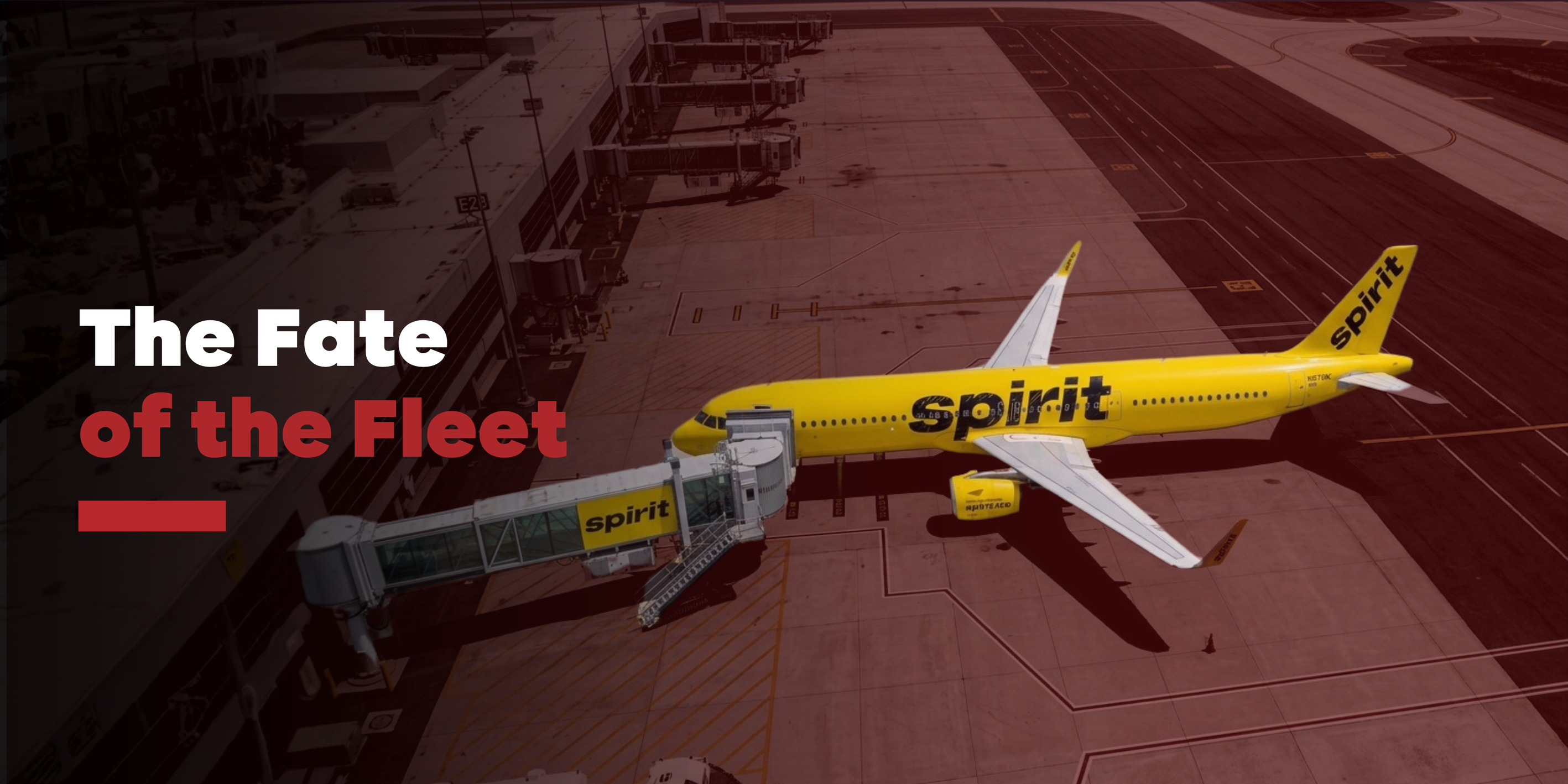
When an airline liquidates, the fleet does not move as one block. Ownership determines what happens next, and in Spirit’s case that distinction is central to understanding the process.
At the center of the liquidation are more than 90 aircraft. Of those, more than 60 are leased jets.
Those planes do not belong to Spirit in the long-term sense; they belong to lessors, which means
they are expected to be reclaimed, inspected, repositioned, and either placed with new operators or
stored until market conditions improve.
The other category is roughly 28 Spirit-owned jets. Those aircraft are the airline’s assets to sell, and
they are the part of the fleet most likely to go through structured sales, auctions, or negotiated dispositions. Their value depends heavily on records, maintenance status, engine condition, and how
quickly buyers can be found.
That is why the phrase “Spirit’s fleet” can be misleading. Some aircraft are returning to their financial
owners. Others are becoming liquidation assets to be marketed and sold.
3. How Plane Repo Works:
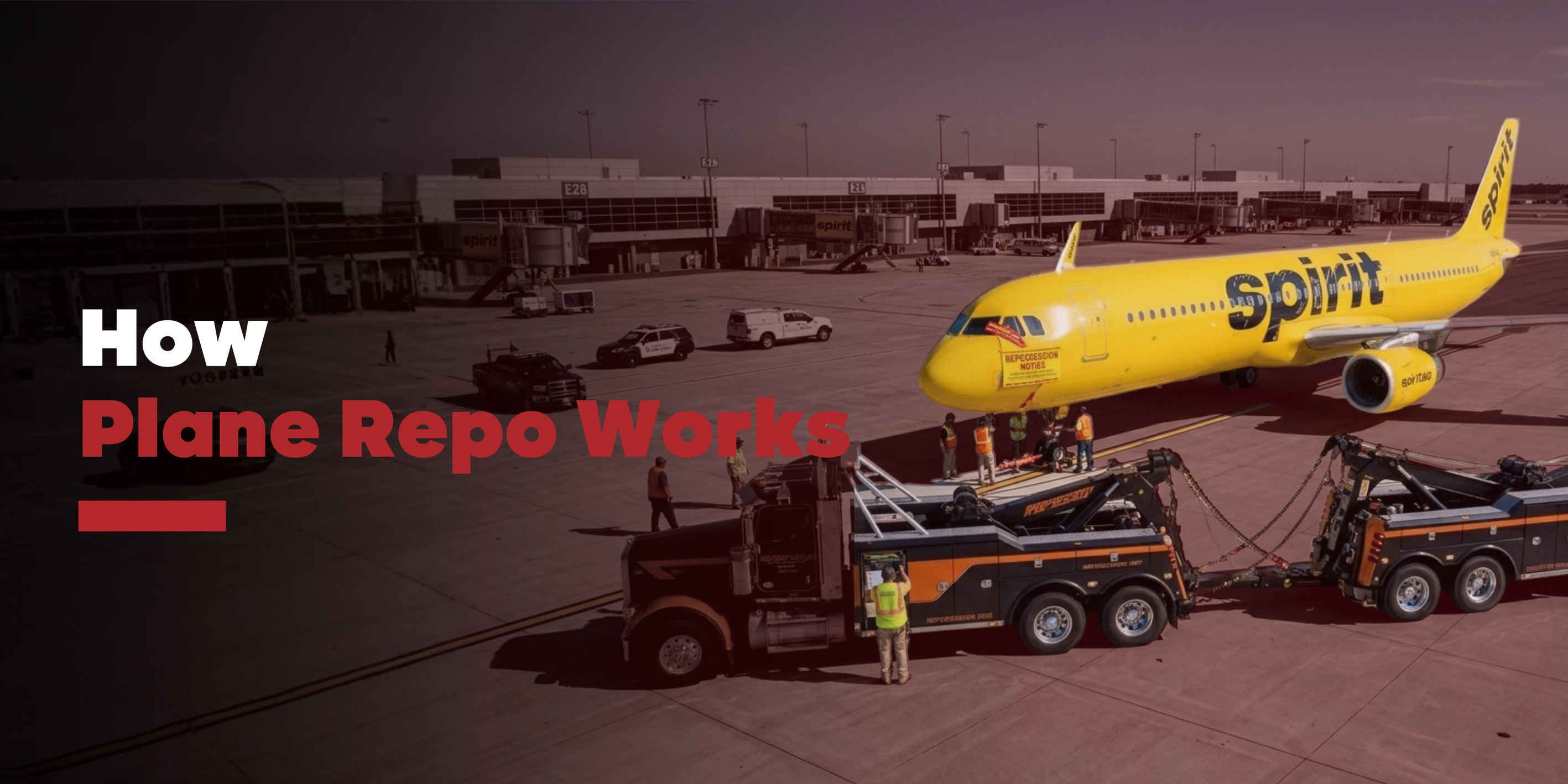
Aircraft repossession has a reputation for being part legal process, part logistics drill, and part improvisation. In airline failures, it can feel like the Wild West.
Once a lessor or recovery team is cleared to take control of an aircraft, the work starts fast. Ferry pilots may be brought in quietly, sometimes in plain clothes, to avoid attracting attention at busy terminals. Movements can happen at odd hours or under the cover of night, especially when the goal is to
remove aircraft efficiently from high-traffic airports without creating operational drama.
But taking possession is only the beginning. Before a plane moves, teams need to verify maintenance
records, inspect engines, assess airworthiness status, and coordinate with airport operations, maintenance crews, and legal representatives. If documents are incomplete or key components are in question, the aircraft’s value can fall sharply.
Then comes the big decision: strip parts or fly the aircraft out. Some jets are worth more as sources of
engines, landing gear, avionics, and other high-demand components. Others are better preserved intact and flown to desert storage, where dry conditions help protect the airframe while owners plan a
sale or future lease.
Neither option is simple. Stripping parts requires controlled facilities, technical labor, and documentation. Ferrying aircraft to storage requires crews, permits, insurance coordination, maintenance signoffs, and available space at the destination. Multiplied across dozens of aircraft, it becomes a major
industrial exercise.
4. The Value in the Scraps:
The most visible assets in an airline liquidation are the airplanes, but they are not the only assets that
matter. In some cases, access can be just as valuable as metal.
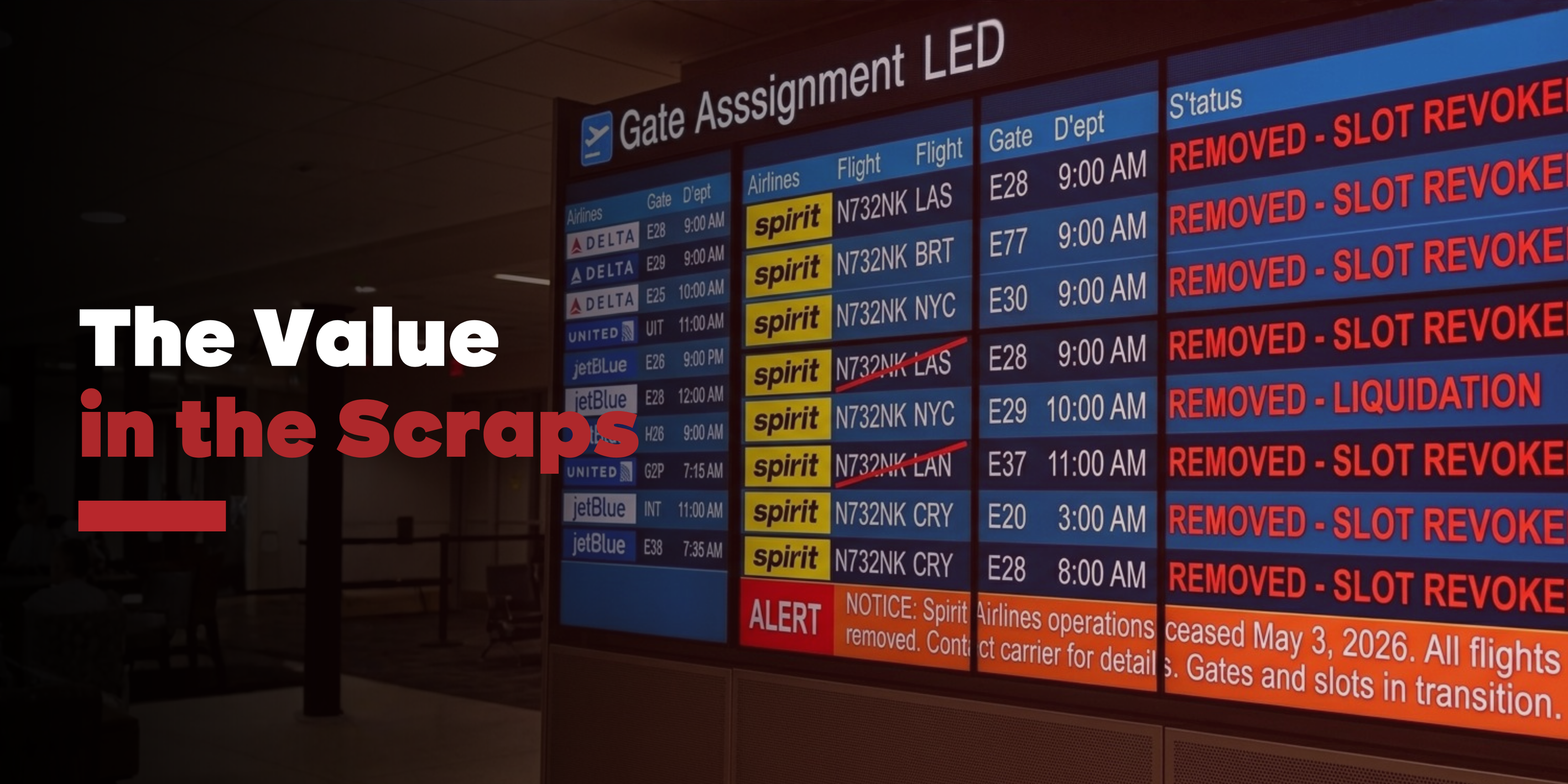
At constrained airports like LaGuardia and Newark, gates and slots carry serious strategic value. They
are limited, heavily regulated, and highly sought after by competing airlines looking to expand or defend market share. When a carrier exits, the fight over those positions can be as intense as the fight
over aircraft and spare parts.
That is why liquidations are never just about parked jets. They are also about infrastructure, timing,
and control over future access to key markets. A grounded plane has value. A scarce slot at a major
airport may have just as much.
Final Thoughts
The Spirit Airlines liquidation is a reminder that airline failures unfold on several levels at once. There
is the financial story of failed rescue efforts and creditor pressure. There is the operational story of
parked aircraft, repossession teams, and storage plans. And there is the strategic story, where gates,
slots, and asset timing shape who benefits from the collapse.
What happens next will depend on how efficiently the aircraft are recovered, how the owned jets are
sold, and how much value can be extracted from everything around the fleet—not just the planes
themselves.